
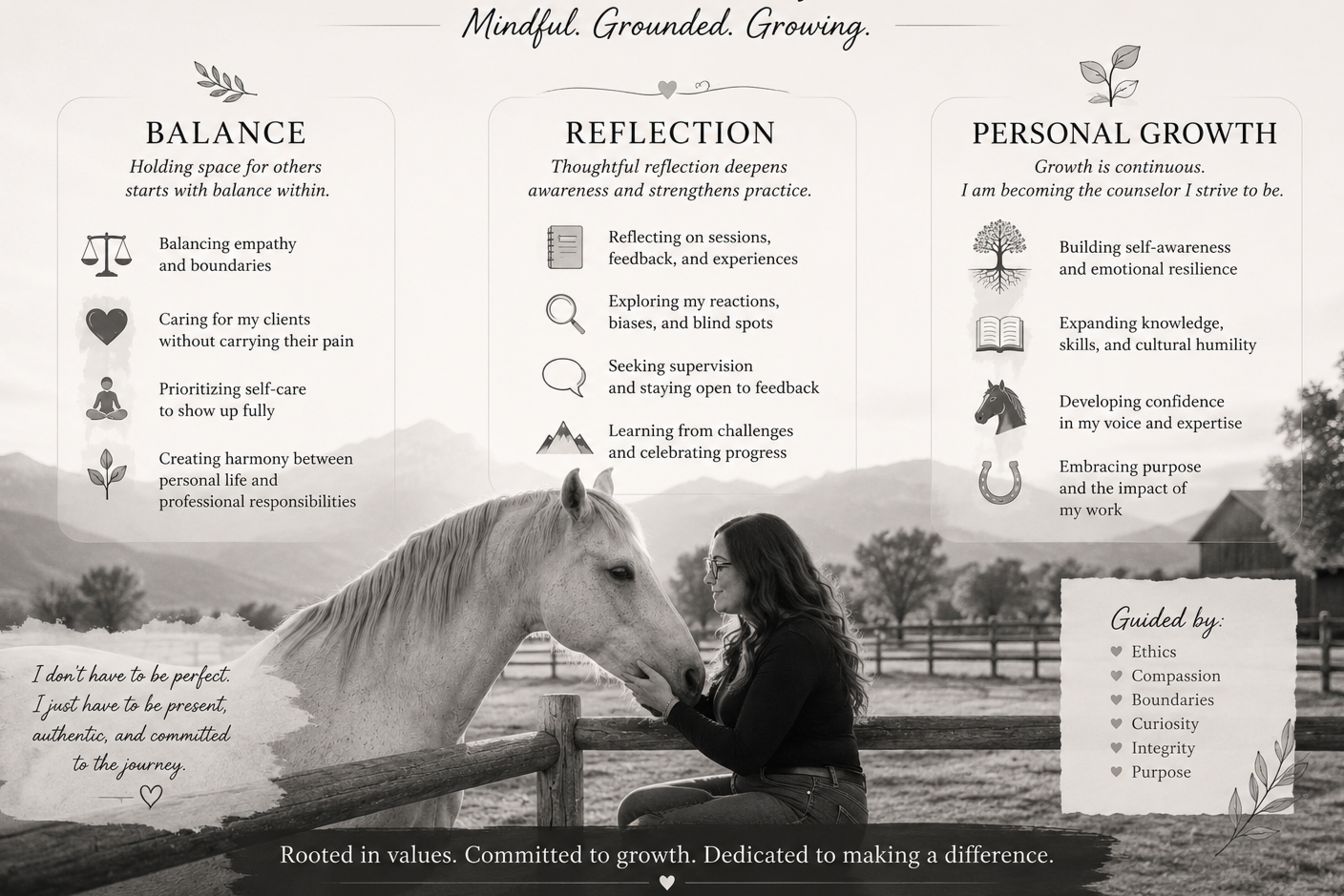
Psychological Fitness
Reflection on Growth and Development
The dispositional value of Psychological Fitness has become increasingly meaningful to me as I have progressed from learning about counseling ethics in the classroom to applying them with actual clients during my practicum and internship experiences. When I originally completed the Counselor Ethical Boundaries and Practices artifact in CNL-505, my understanding of psychological fitness was primarily centered on knowing ethical boundaries and recognizing behaviors that could interfere with professional counseling. Through continued coursework, instructor feedback, supervision, and direct clinical experience, I now understand psychological fitness as an ongoing responsibility to evaluate my emotional well-being, self-awareness, boundaries, reactions to clients, and ability to remain clinically effective.
The purposeful revisions I made to this artifact reflect this deeper understanding. Rather than viewing ethical boundaries only as rules counselors are expected to follow, I revised my perspective to recognize that maintaining boundaries requires continuous self-awareness. Counselors bring their personalities, experiences, values, emotions, and vulnerabilities into the counseling relationship. Psychological fitness does not require counselors to be unaffected by their personal lives; rather, it requires counselors to recognize when their own experiences may influence their clinical judgment or ability to remain fully present with clients. The American Counseling Association (ACA, 2014) specifically requires counselors to monitor themselves for physical, mental, or emotional concerns that could result in professional impairment and to seek assistance or limit professional responsibilities when necessary.
My internship experience has significantly strengthened this area of my professional development. One of the most important areas of growth for me has been learning the difference between being emotionally invested in a client's well-being and feeling responsible for solving the client's problems. Earlier in my development as a counselor, my natural desire to help could sometimes lead me toward over explaining, advising, or trying to find solutions too quickly. Through supervision and reflection, I have become more aware that effective counseling often requires me to slow down, remain curious, and allow clients to develop their own insights. I have learned to ask myself questions such as, Am I responding to what the client needs right now, or am I responding to my own discomfort with seeing the client struggle? This type of self-evaluation has helped me become more intentional in session and has strengthened my ability to maintain appropriate therapeutic boundaries.
Another significant area of growth has been recognizing the importance of supervision and consultation as components of psychological fitness. I have encountered situations during internship involving ethical uncertainty, scope-of-practice questions, difficult family dynamics, safety concerns, and clients whose experiences evoke strong emotional reactions. Instead of believing that competence means independently knowing how to handle every situation, I have learned that professional maturity includes recognizing when consultation is necessary. CACREP emphasizes the importance of self-care, self-awareness, self-evaluation, ethical decision-making, and supervision within counselor preparation (Council for Accreditation of Counseling and Related Educational Programs [CACREP], 2024). Supervision has therefore become more than a program requirement for me; it is an important safeguard for both my clients and my continued professional development.
My understanding of psychological fitness has also expanded through learning to recognize my own emotional responses within the therapeutic relationship. There are times when I may strongly empathize with a client's experiences or feel particularly protective of a client who is struggling. I have learned that these reactions are valuable sources of information when they are recognized and appropriately processed rather than automatically acted upon. Greater self-awareness allows me to consider whether my emotional response is helping me understand the client or potentially influencing the direction I am taking in therapy. This awareness has strengthened my ability to return the focus to the client's experiences, autonomy, values, and therapeutic goals.
These experiences have also changed how I understand the relationship between self-care and ethical practice. Earlier in my program, I sometimes viewed self-care primarily as a strategy for preventing burnout. I now recognize that self-care is also an ethical responsibility because a counselor's psychological and emotional functioning directly affects clinical presence, judgment, boundaries, and decision-making. ACA Standard C.2.g emphasizes counselors' responsibility to monitor themselves for impairment and take appropriate action when their functioning could affect professional services (ACA, 2014). Similarly, CACREP identifies self-care, self-awareness, and self-evaluation as important components of ethical and effective counseling practice (CACREP, 2024).
As I continue developing as a counselor-in-training, an important goal is to strengthen my ability to recognize signs that I am becoming emotionally overwhelmed, overly invested, or professionally fatigued before those experiences affect my clinical work. I want to continue developing healthy boundaries around my caseload, personal life, documentation, consultation, and the emotional responsibility I carry after sessions. I also want to become increasingly comfortable with uncertainty. Counseling does not always provide immediate answers, and psychological fitness includes being able to tolerate uncertainty without feeling compelled to fix, rescue, or prematurely direct a client.
Overall, my development in psychological fitness represents a shift from simply knowing professional boundaries to understanding myself within those boundaries. My CNL-505 artifact provided an important ethical foundation, but my clinical experiences have allowed me to understand why these standards matter in practice. I have become more reflective about my emotional responses, more willing to seek supervision, more attentive to my scope of competence, and more intentional about separating my responsibility as a counselor from the client's responsibility for their own choices and growth. I recognize psychological fitness as an ongoing developmental process rather than something that is achieved once. Continuing to evaluate my wellness, biases, boundaries, emotional responses, and professional functioning will be essential as I transition from counselor-in-training to independently practicing professional counselor.
Professional and Ethical Standards
ACA Code of Ethics – Standard C.2.g: Impairment
ACA Standard C.2.g requires counselors to monitor their physical, mental, and emotional functioning for signs of impairment and to seek assistance or modify professional responsibilities when impairment could compromise their ability to provide safe and effective counseling services (ACA, 2014). This standard directly relates to psychological fitness because maintaining professional competence requires ongoing awareness of how personal well-being can influence clinical judgment and client care.
CACREP Common Core Area – Professional Counseling Orientation and Ethical Practice
The CACREP standards emphasize the development of ethical professional counselors who demonstrate knowledge, skills, and professional dispositions throughout counselor preparation. Of particular relevance to psychological fitness are expectations involving ethical decision-making, self-awareness, self-evaluation, self-care, supervision, and continued personal and professional growth (CACREP, 2024). CACREP also emphasizes that counselor preparation involves development of professional dispositions in addition to knowledge and counseling skills, reinforcing the importance of personal and professional development throughout training.